The Moon Doesn’t Care
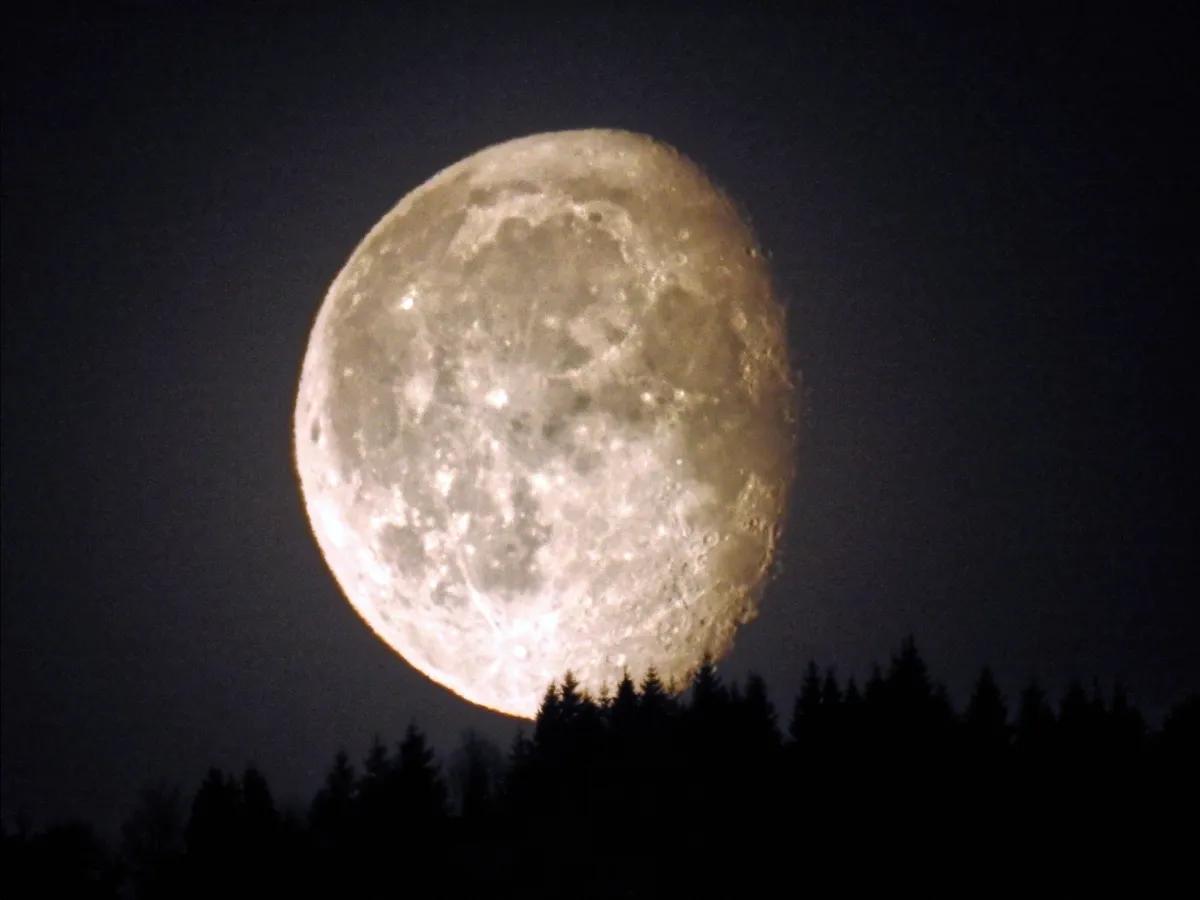
This morning, I watched the Moon slip quietly behind the ridge in front of my patio.
Age-induced insomnia has its advantages and I even managed to take the photo above.
There was no drama. No fanfare. Just a pale, heavy disc sinking into the trees as the light came up behind it. If you weren’t looking, you’d miss it entirely. The sort of thing that happens every day without asking for attention.
I stood there longer than necessary, coffee going cold, watching it disappear.
And it took me back.
Nearly sixty years ago, as a 14-year-old, I watched something that did have a bit more fanfare. Like most of the world, I sat there in a kind of stunned silence as the Apollo 11 Moon Landing unfolded.
It’s hard to explain that feeling now. Not excitement, exactly. More like disbelief. As if someone had announced they were popping down the shops… and the shops just happened to be on the Moon.
And the strangest part of it?
They actually pulled it off.
The thing that carried them there,the Apollo Guidance Computer, had about 64 kilobytes of memory. That’s not a typo. Kilobytes.
By today’s standards, it’s not just primitive, it’s almost comical. A modern phone wouldn’t even notice it. You’d struggle to store a decent photo on it. And yet, somehow, that little box of wires and optimism helped land two men on the lunar surface and bring them home again.
No apps. No updates. No “have you tried turning it off and on again?” Just… work.
And then, oddly, we stopped.
We went to the Moon, proved we could do it, planted a flag, took some photos, hit a few golf balls, took some rocks, drove a rover and left some footprints.
Then, for the better part of half a century, we more or less left it alone.
The Moon carried on regardless, of course. Rising, setting, doing its thing.
Completely unimpressed.
Now, after all this time, we’re going back.
The Artemis Program is already underway, with the aim of putting humans on the Moon again, this time not just for a visit, but to stay a while.
Different goals, better technology, slightly more of a plan (one hopes).
It’s taken us over fifty years to decide it might be worth another look. You have to admire the consistency.
This morning, watching the Moon sink into the trees, none of that felt particularly urgent.
It didn’t look like a destination. It didn’t look like a milestone or a stepping stone or the next great frontier.
It just looked like the Moon.
Distant. Quiet. Entirely unconcerned with whether we visit or not.
And maybe that’s the thing.
For all our talk of returning, conquering, exploring, of planting flags and building bases, the Moon doesn’t care. It never did.
We went there once with less computing power than a modern kitchen appliance and somehow made it work. Now we’re gearing up to do it again with machines that would seem like magic to the engineers of 1969.
And still, from down here, it looks exactly the same.
This morning, it slipped behind the ridge without so much as a goodbye.
As if to say:
Take your time.