The Bank
Kick the Can and Second World War Shootouts
Across the road from our house on Wern Fawr Road, in the Port Tennant end of Swansea, was The Bank, an unassuming strip of land with old garages, overgrown grass, and a handful of crumbling concrete shelters. This was the late 1950s, close enough to the war that the shelters were still standing and nobody had got round to knocking them down.
To anyone else it was waste ground. To us it was everything: battlefield, spaceport, football pitch, forbidden zone. We'd vanish there for hours, grubby and loud, completely absorbed in whatever drama we were staging.
It was really the last slope of Kilvey Hill before it flattened out into railway lines, the dual carriageway, and then the King's and Queen's docks with the bay beyond.
There were three old air-raid shelters, and each had a name: the White Shelter, the Red Shelter (the tallest), and the Underground Shelter, which was the favourite for any game requiring mystery or danger. Its dark corners were perfect for hiding, but most of the serious business happened in the open ground between them. That's where we played Kick the Can, a sort of hide-and-seek-meets-tag marathon that could eat half a day. A tin can went on a ridge of ground, one player guarded it, and the rest of us crept about trying to boot it away. Anyone caught went to prison until somebody managed a heroic sprint and sent the can flying, which freed the lot.
When tactics got boring we moved on to shelter jumping, which was exactly what it sounds like: leaping from the roof of the Red Shelter to the Underground Shelter, again and again, until someone's mother appeared at a window yelling at us to stop being idiots.
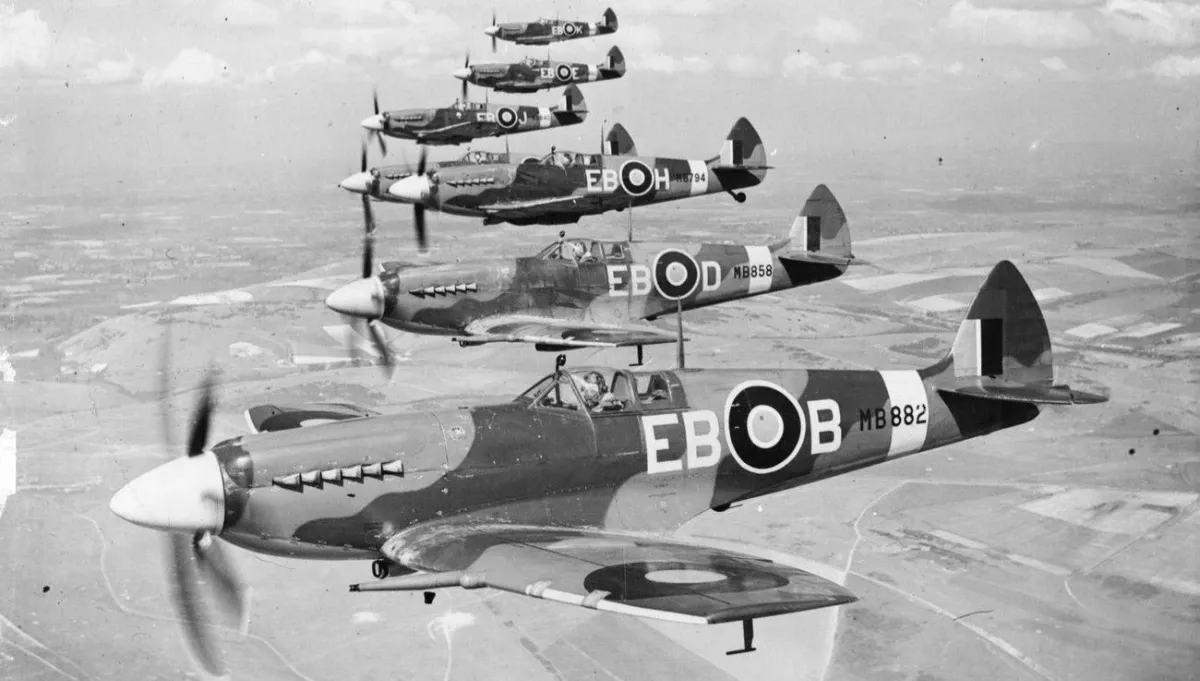
The most regular entertainment was re-enacting the Battle of Britain. We zoomed about with arms out as wings, rattling off machine-gun fire with our mouths. I always wanted to be a Spitfire pilot when I grew up, blissfully unaware they'd stopped making Spitfires years before. Then there were the wildly politically incorrect Second World War shootouts, Brits versus Germans, blasting away with stick machine-guns and dying in spectacular fashion. The Germans always went down shouting "Achtung!" or "Heil Hitler!" or "Britisher Schweinehund!" while the Brits muttered a calm "God Save the Queen" before crumpling nobly to the ground. Historical nonsense, obviously, but it proved our natural gift for the stiff upper lip even under imaginary fire.
Sometimes we switched to Fireball XL5 or Zorro instead, which meant arm-waving, imaginary sword fights, and loud "Urgh!"s whenever someone scored a dramatic hit. We never used real sticks for swords. Even as children we seemed to know someone would lose an eye.
The garages mattered as much as the shelters. In winter their long wall of corrugated metal and peeling paint was our football goal. In summer we chalked cricket stumps onto the doors and played endless, mostly rule-free innings. Those doors were ours: battlements during wars, wickets during cricket, spaceship controls when we launched ourselves into orbit.
Years later, Mam told me the garages had been a makeshift ambulance depot during the war. The same doors we chalked stumps on, the same walls we pelted with footballs, had once been part of a life-and-death operation. While we were playing at war, we were running around on ground marked by the real thing, and we had no idea.
Our carefree games were only possible because the adults' serious ones had ended.
The Bank gave us that, and we never knew we owed it a debt.