In Defence of Wasps (Sort Of)
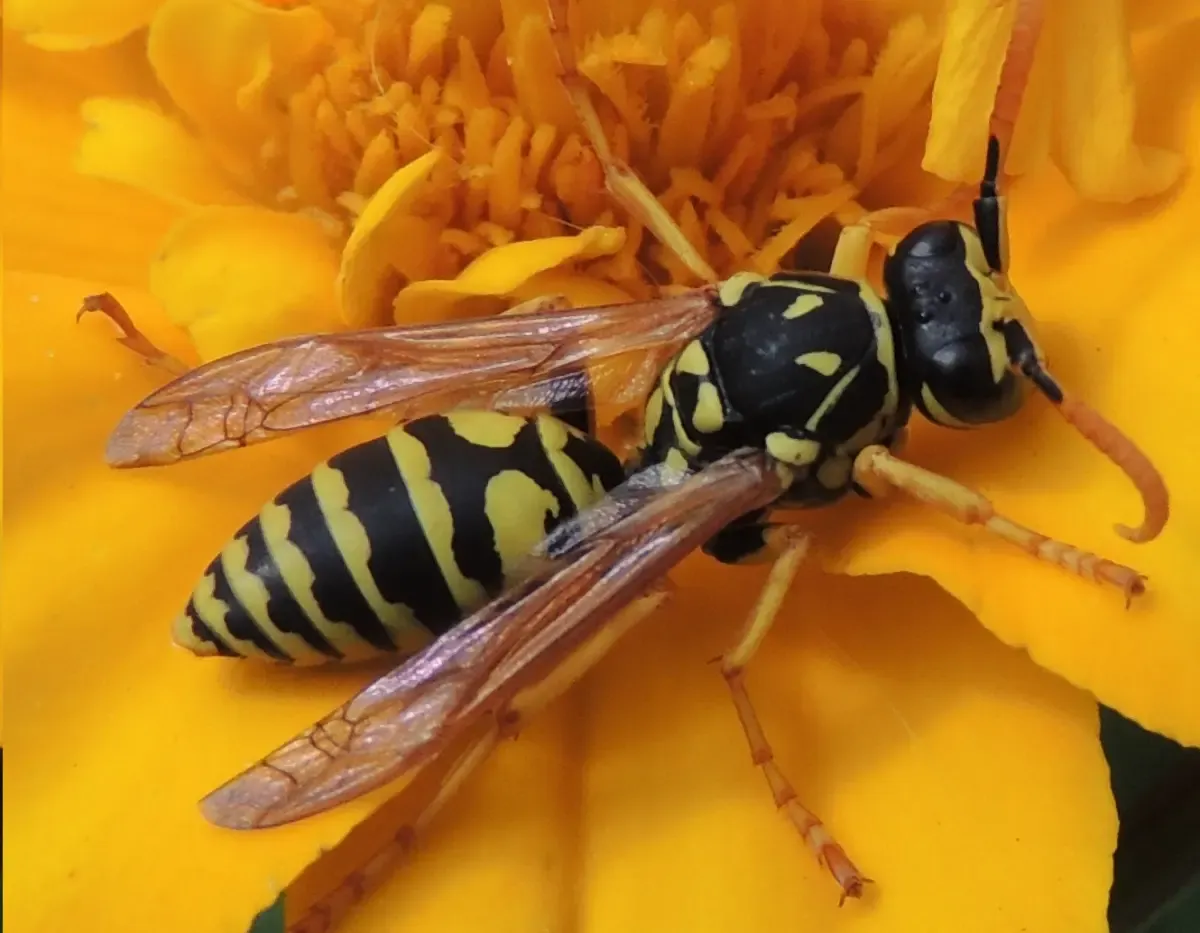
European Paper Wasp pollinating a marigold - My photo
Wasps. The striped bloody nuisances of the garden world, the uninvited guests at every summer picnic, the tiny, winged psychopaths that turn a man sipping a beer on his terrace into a flailing, panic-dancing fool. I’ve sworn at them, run from them, and on one memorable occasion, attempted to fend one off with a frying pan. It did not end well for my dignity.
My daughter Jennifer is a “flying things that sting you magnet” and swears blind that she is stung at least twice a week.
But here’s the thing, and it pains my inner grump to admit it, we’ve got them all wrong. Mostly. They’re not just garden gangsters. They’re also vital, if deeply unpleasant, members of the ecosystem. They’re the binmen, the pest control, and the slightly unhinged bouncers of the natural world. So, in the spirit of fairness, let’s try to see them for what they are: nasty, necessary little fuckers.
The Unseen Work: What Wasps Actually Do For You
Before you reach for the rolled-up newspaper, consider this. While you’re fuming about one buzzing near your jam sandwich, that wasp’s larvae back in the nest are being fed on a diet of pulped caterpillars, aphids, and other insects that would otherwise be chewing your tomatoes and roses to lace. A single nest can take out thousands of garden pests in a season. They are, in their own horrifying way, ruthless, efficient pest controllers.
And they’re pollinators. Not as cuddly or effective as a bumblebee, mind you. They’re the rough, clumsy pollinators, the kind that show up late, spill their drink, and start a fight. But they do transfer pollen from flower to flower, especially later in the season. So, while they’re arseholes, they’re productive arseholes.
A Taxonomic Guide to Wasps (Murphy Edition)
Now, not all wasps are created equal. Just like humans, there’s a spectrum of bastardy. After years of observational research (i.e., getting stung and swearing a lot), I’ve developed my own, entirely unscientific classification system.
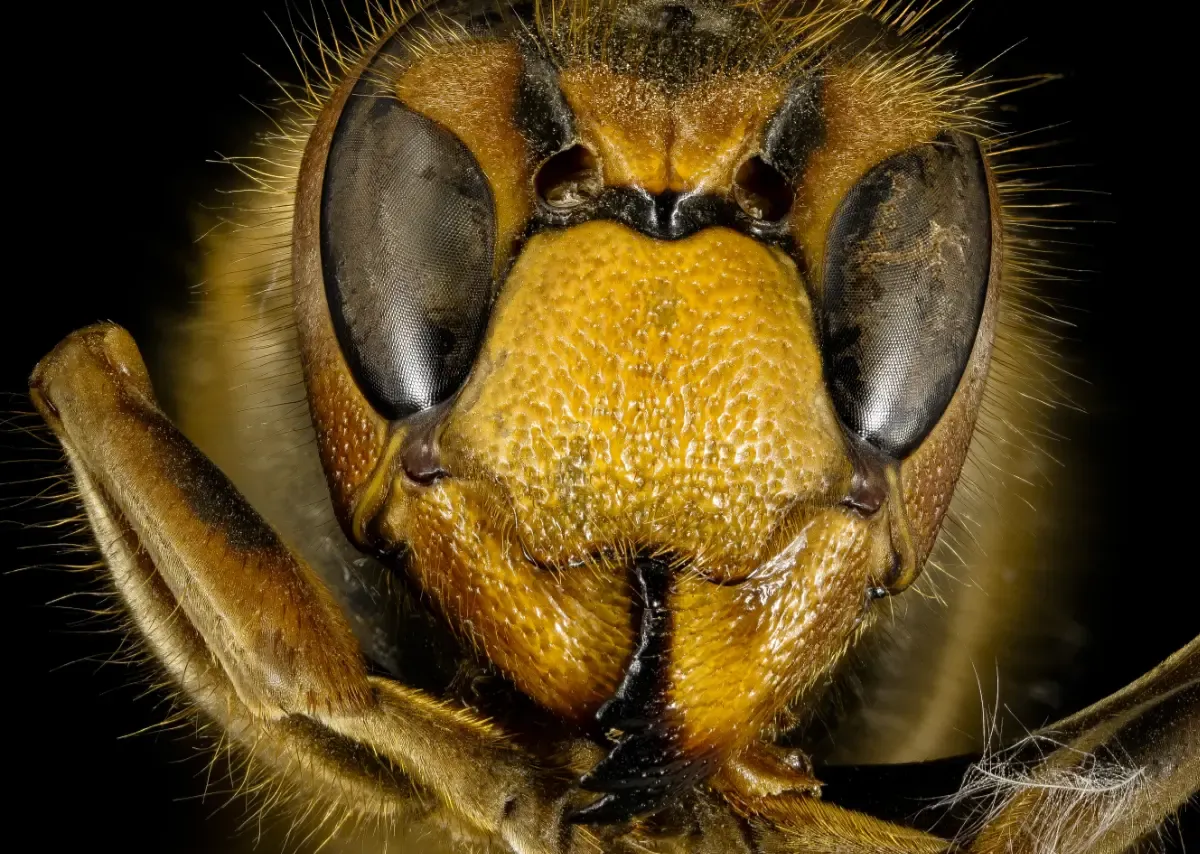
Close up of a European Hornet
Aggressive buggers
The ones that sting you because you looked at them funny. These are the hardmen of the wasp world. You breathe too heavily in their general direction, and they’ll take it as a declaration of war.
The European Hornet (Vespa crabro): The Darth Vader of wasps. Big, loud, and terrifying. They look like they’ve been sent from the future to assassinate you. Truth is, they’re often less aggressive than their smaller cousins, but when a creature the size of your thumb is dive-bombing your head, philosophical nuance goes out the window.
The Common Wasp (Vespula vulgaris): Your classic picnic-ruiner. The yellowjacket. This is the little shit who’s determined to crawl into your can of Coke and die a sugary death, but not before stinging your lip on the way out. Highly social, which means if you annoy one, you annoy his fifty cousins too.
The German Wasp (Vespula germanica): The Common Wasp’s slightly more irritable twin. A bit quicker to take offence, a bit more persistent in his investigations. Think of the Common Wasp as a noisy drunk; the German Wasp is the one who’s already taken his jacket off.
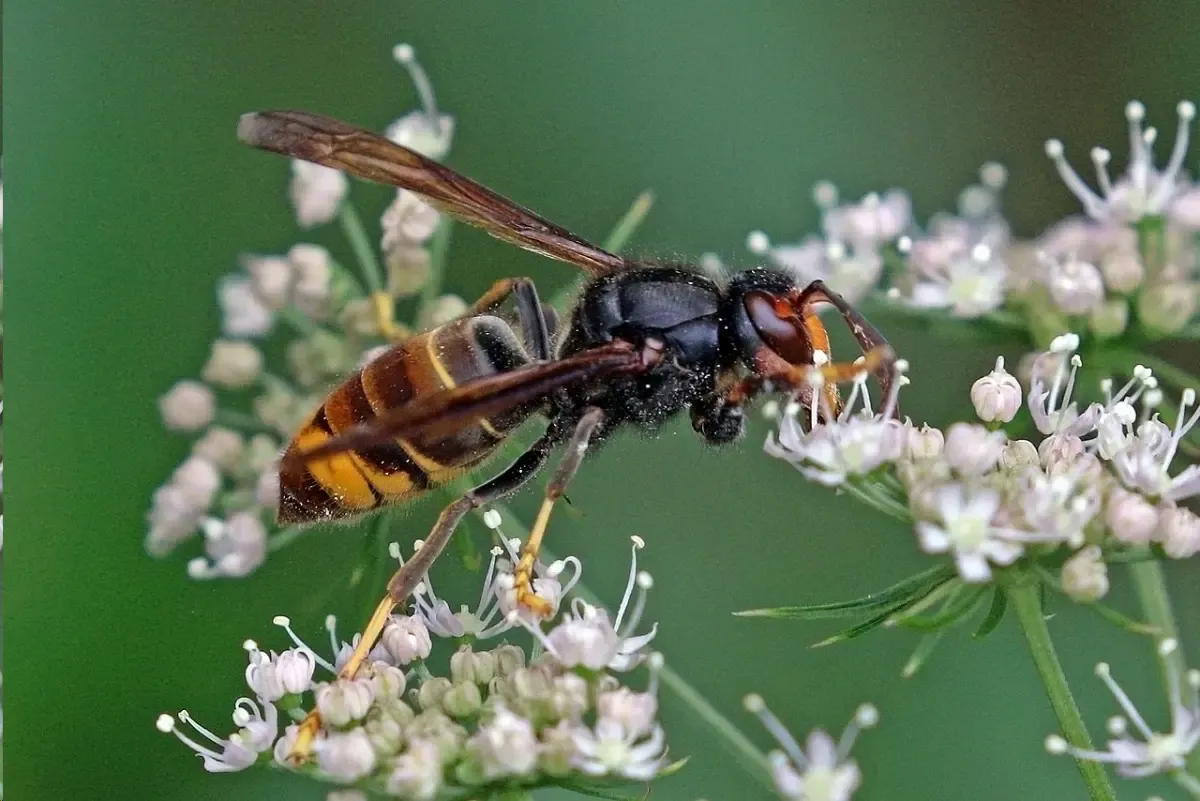
The Asian Hornet is an invasive species - Charles J. Sharp, CC BY-SA 4.0, via Wikimedia Commons
.jpg)
Ecological Menace
- Asian Hornet (Vespa velutina): An invasive species in Europe and an absolute menace to honeybees. Smaller than the European hornet but no less vicious. They hover outside beehives like tiny gangsters, picking off bees one by one. If you spot one, report it to your local environmental authority. They're not just a nuisance, they're an ecological disaster.
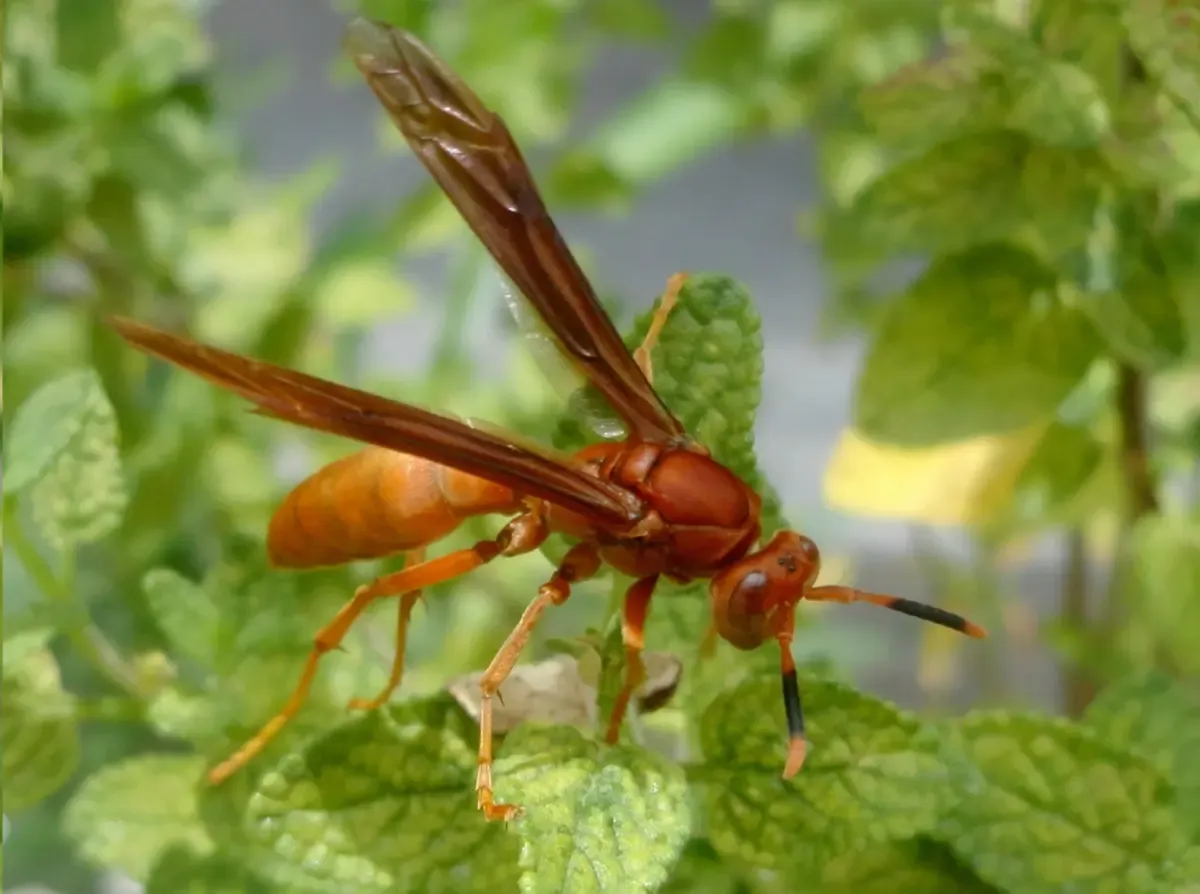
A Red Wasp - Juan Carlos Fonseca Mata, CC BY-SA 4.0, via Wikimedia Commons

Territorial Menaces
Aggressive when cornered or threatened but not always homicidal. These ones will generally leave you alone if you do the same. The key word is ‘generally’.
The Median Wasp (Dolichovespula media): Builds those beautiful, grey, papery nests in bushes and trees. Lovely to look at, less lovely to accidentally walk into while pruning. They’re territorial, not psychopathic. There’s a difference. A small one.
The Red Wasp (Polistes canadensis): A bit more fiery-tempered than its dominula cousin, but the same principle applies: leave their nest alone, and they’ll largely return the favour.
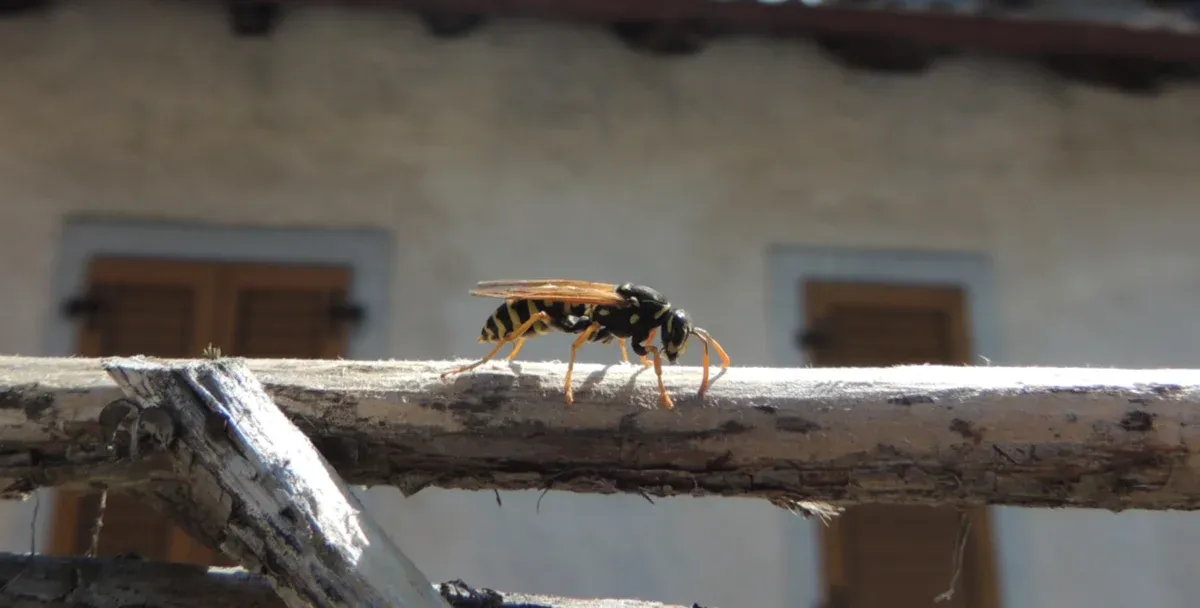
A European Paper Wasp on my patio's wooden trellis
The Ones That Mostly Leave You Alone
The introverts of the wasp world. You’ll barely know they’re there, provided you don’t start poking their home with a stick.
- The European Paper Wasp (Polistes dominula): I’ve written about these little architects before. They’re the ones patiently chewing my trellis into pulp to build their elegant, open-combed nests. I’ve watched them for hours. They’re focused, determined, and will only stab you if you directly interfere with their DIY projects. I can respect that.
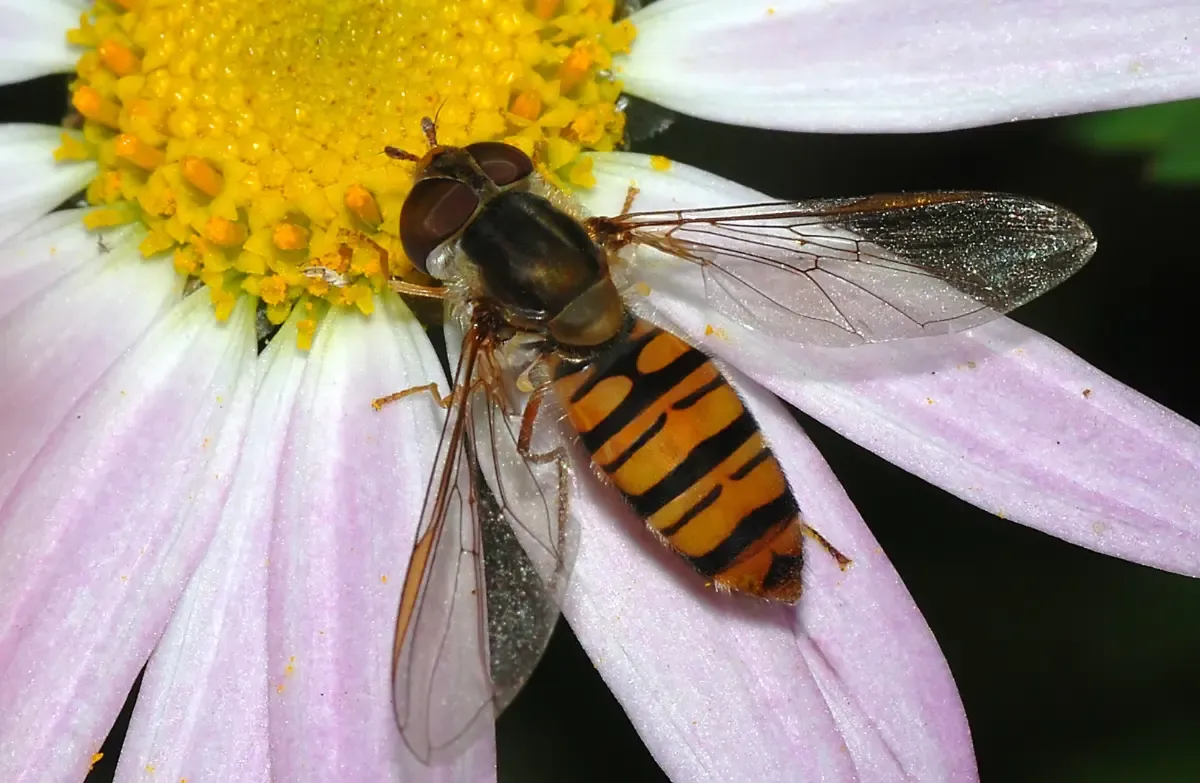
Hover Fly - Alvesgaspar, CC BY-SA 3.0, via Wikimedia Commons

Not Really Wasps at All (The Harmless Impostors)
This is where we should all feel a bit guilty. We spend so much time swatting at things that look like wasps that we often massacre the innocent.
Hoverflies (Syrphidae family): These are the heroes. They’re flies dressed in wasp fancy dress for protection. Completely harmless, they can’t sting you, and their larvae are voracious aphid-eaters. If you see one hovering, perfectly still, in mid-air, it’s one of the good guys. Leave it be.
Bee-flies (Bombyliidae): Little, fuzzy, bumblebee mimics with a comically long proboscis. Also utterly harmless and decent pollinators. They look like tiny, flying pandas. Don’t hurt them.
Wasp Beetles (Clytus arietis): Not even close to being a wasp, but they've nailed the look. Black and yellow bands, waspish posture, the works. Completely harmless. Can't sting. Just wants you to think it can.
Why Wasps Get Drunk and Belligerent: A Pub Story
Now, here’s a crucial bit of intel that explains their end-of-season madness. Come late summer, the wasp social structure collapses. The queen stops laying eggs, which means there are no more larvae in the nest to feed.
Why does this matter? Because the adult workers feed on sugary fluids, but they feed the larvae on chewed-up insects. The larvae, in return, produce a sweet, sugary saliva that the workers drink. It’s a weird, disgusting, but functional barter system.
No more larvae means no more sweet, free sugar. The unemployed, sugar-starved workers are cast out into the world, desperate for a fix. They find it in your fallen, fermenting apples, your pint of beer, your jam tart. They get absolutely wankered on fermented sugar.
And like a lot of creatures (including some of my uncles), they become belligerent, uncoordinated drunks. They’re not inherently more aggressive; they’re disoriented, desperate, and pissed as newts. This is when most human-wasp conflicts occur. You’re not dealing with a calculated assassin; you’re dealing with a tiny, striped wino who’s lost his job and his benefits.
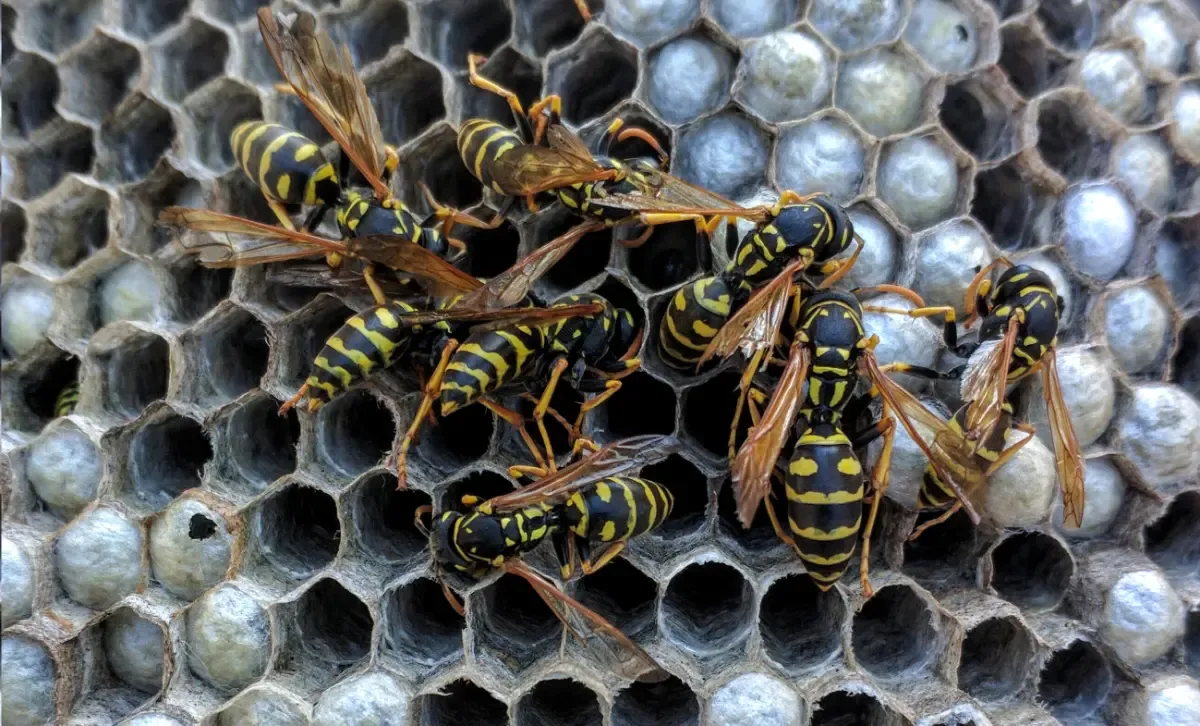
A Wasp Nest - Dicklyon, CC BY-SA 4.0, via Wikimedia Commons

How to Deal With a Wasp Nest (Without Committing Genocide)
So, you’ve found a nest. In your shed, your attic, the eaves. Your first instinct is to nuke it from orbit. I get it. But hold fire.
The First and Best Option: Leave It the Hell Alone. If the nest is in a spot you don’t use, a far corner of the garden, high in a tree, just let it be. The nest is an annual structure. The colony will die off in the autumn, and the new queens will fly away to hibernate. The old nest will not be reused. You can remove it in the winter when it’s completely empty. Problem solved with zero effort and no chemical warfare.
The "It's in My Bloody House" Option. If it’s in a high-traffic area like a door frame or inside a garage you need to use, then action is needed. But that doesn’t mean a can of poison.
Call a Professional. Look for a pest controller who offers relocation services. Yes, it’s a thing. They can often remove the nest whole and move it to a woodland where it can carry on its pest-control duties far from your patio.
The Night-Time Black Bag Method (For the Brave/Stupid). If you must DIY, do it at night when all the wasps are inside and torpid. Quickly and carefully seal the entire nest in a large, heavy-duty black bin bag, detach it, and tie the bag shut. You can then dispose of it or, ideally, release it somewhere very, very far from your house. This is high-risk and I do not officially recommend it, but it’s more humane than spraying.
The point is, poison should be the absolute last resort. It’s messy, it often doesn’t work fully, and it sprays toxins around your garden that can harm the things you do want there.
The Final, Grudging Verdict
So, there you have it. Wasps are complex. They’re gardeners, pollinators, and vicious, drunken thugs. They are a walking, flying contradiction. They are, in many ways, a lot like us.
The next time one lands on the rim of your glass, before you unleash the newspaper of doom, remember: it’s probably just a stressed-out, unemployed single mother, drunk on fermented pear, trying to get through the day.
Now, if you’ll excuse me, I’m off to the terrace. And yes, I’ll be keeping one eye open for the little buggers. Some grudges die hard.